

Sharing Experience at All-Russian Forum of Students
 22.05.2015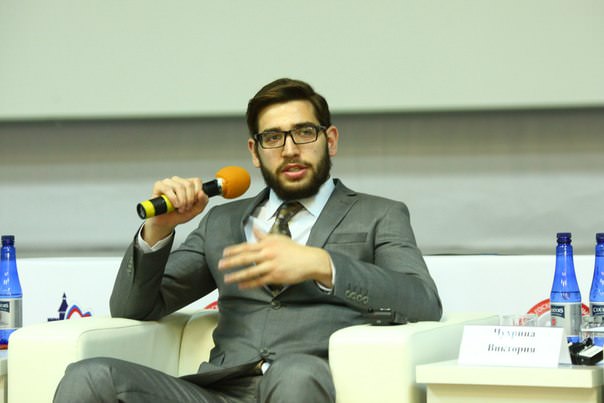
The All-Russian Forum of Students “Quality of Education: International Experience & Best Russian Practices” is continuing its work at Astrakhan State University. The event participants have discussed mechanisms to enhance the process of education during their round-table talks.
During the round-table talk “International & Russian Working Experience of Student Councils in Quality of Education & Student Tutoring and Mentoring Models”, a discussion related to the formation process of tutoring and mentoring at universities has taken place. A student delegate of Worcester Polytechnic Institute (USA) has been the first to share working experience of such councils;  he has paid special attention to collaboration between tutors, professors, and students.
According to the key speakers and experts of the round table, introduction of tutoring and mentoring into educational practices will contribute a lot to the development of students’ professional skills. Three students of ASU have determined the notions “tutor” and “mentor” within the context of the Russian educational process; they have also told about experience of organization of tutoring support at two 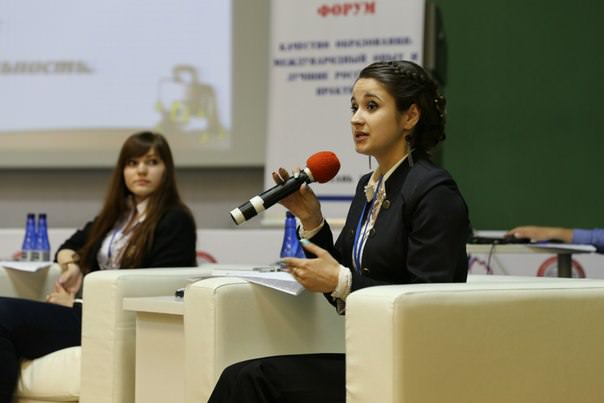 units of their alma mater – at the Department of Philology & Journalism and at the Chemical Department.
The speech given by Prof. Hekyung Kim from Dongseo University (South Korea) has caused an especially vivid discussion. The main tool to check the results of the educational process at Dongseo University is to ask its 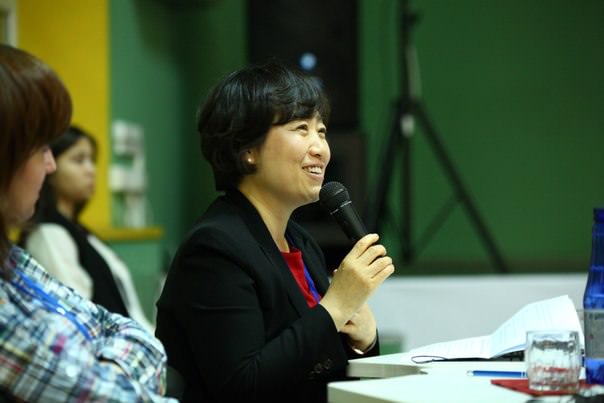 students to fill in a questionnaire, thanks to which pluses and minuses of educational techniques applied by professors during a term are revealed. According to the professor, such a form of feedback is very useful to improve the academic process.
Reps of Saint Petersburg State University have told about experience in improving the quality of education in the field of arts as per the model by Bard College (USA). Modern education as per that model is a system of higher education aiming to stimulate students’ wish and ability to study independently, to think critically, and to express their thoughts efficiently. Such a system is peculiar for its flexible syllabus that combines a broad interdisciplinary scale with a profound coverage of a discipline being delivered; it stimulates the interdisciplinary approach and makes it possible 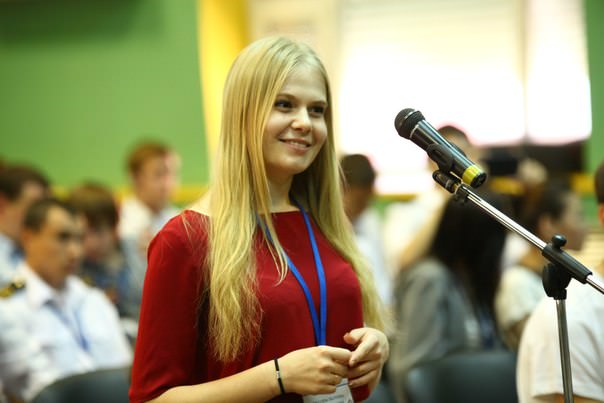 for students of Saint Petersburg State University to choose their lecturers themselves, as well as consultation hours and themes of their creative works. Besides, the model by Bard College, with which Saint Petersburg State University has been cooperating for over 16 years, is implemented by means of student-oriented pedagogy – interactive work with key texts of world culture both in a lecture hall and as a home assignment. A large number of questions, which the speakers and the experts have had to answer, has witnessed for the audience’s profound interest towards such experience.
The Forum agenda has also included round tables “Quality of Education & International Student Project Teams” and “Experience of Introduction of Principle “Equals Teach Equals” both given by Astrakhan State University”. A rep of the Financial University under the Government of the Russian Federation has told about her participation in an international project arranged by the 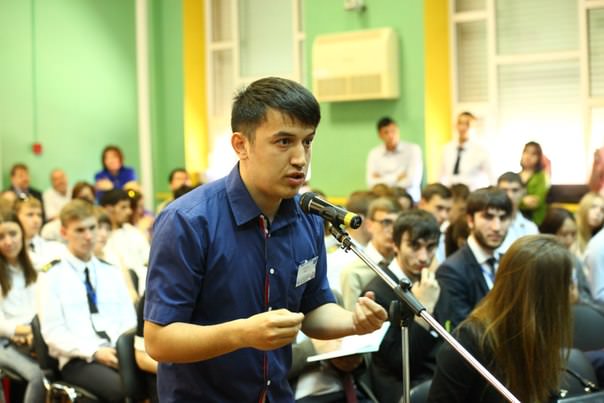 Ernst & Young Company. Another rep of the same University has shared her experience in taking part in a Deloitte project: “This project provides a unique opportunity to work with the best US technical institute (i.e. Worcester Polytechnic Institute) and to improve your English greatly”. Our French guests from the University of Caen Lower Normandy (France) have presented their developments in the quality of education. One of them is “Creative Thinking” that makes it possible to introduce applied aspects into the process of studies. A lot has been told about experience gained by Kanagawa University (Japan) as well.
The technology of studies within large groups, which has been tried successfully at Astrakhan State University to deliver a number of disciplines, has been of special interest. It has been the main theme at the discussion site “Studies within Large Teams & Professors’ Teamwork”. Grounding on their personal experience of participating in this project, the key speakers of the discussion site have summarized outcomes of introduction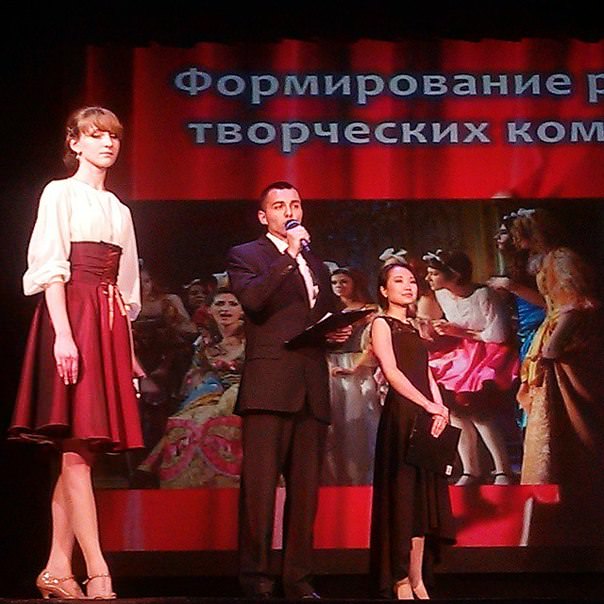 of this technology at ASU: “This form unites students; it encourages them to reveal their leadership qualities; it teaches them how to work as a team member. It also helps them perceive academic materials more efficiently and develops their critical thinking”.
At the open innovative site “Work Experience of Student Socialization Platform to Develop Teambuilding & Leadership”, the Forum participants have continued their discussion of educational practices modernization. They have been told about experience gained by the Socialization Council of ASU, which helps our students learn to work in a team efficiently. The platform has also presented the main stages of realization of creative projects by means of the CDIO technique, which contributes to students’ self-education and to development of their leadership qualities. Our students have become mentors at a number of sports clubs operating at ASU and at a number of concerts given on the University scene – Figaro, The Lion King, Juno & Avos, Adam & Eve, etc.
The evening agenda of the Forum has included team games and sporting events.
Russian original information source: Dmitriy Bychkov (the Press Service of ASU)
Russian original photo source: Tatyana Antropova, Dali Grinevich (the TV Media Center of ASU), Yuri Garanov (the Unit of Internet Technologies)
